
Ladakh Tourism is booming again in 2026, and for good reason. After a difficult 2025 marked by geopolitical tensions, flight suspensions, and widespread travel uncertainty, the region is staging a confident comeback. If you have been holding back on booking your trip because of safety concerns, this guide is written for you.
The question Ladakh Tourism safe in 2026 — is one of the most searched phrases by Indian and international travelers right now. The honest answer is yes, but with important nuances that every traveler needs to understand before packing their bags. From altitude health risks and road conditions to political updates and permit rules, we cover everything you need to know.
Ladakh Tourism and Kashmir — Why the Confusion?
The single biggest source of anxiety around Ladakh Tourism safety comes from confusing Ladakh with Jammu and Kashmir. These are two completely separate Union Territories since October 2019. The Pahalgam terrorist attack of April 2025 happened in Kashmir — not in Ladakh. Ladakh has not witnessed any terrorist activity and continues to be one of the most peaceful destinations in India.
Understanding this distinction is the first step to approaching Ladakh Tourism with confidence. The landscape, administration, security setup, and atmosphere of Ladakh are entirely different from the Valley of Kashmir. Tens of thousands of domestic and international travelers visit Ladakh every year and return home safely.
What Happened in 2025 and What Changed for 2026
To give you a clear-eyed picture of Ladakh Tourism in 2026, it helps to understand what happened the year before.
In April 2025, a terror attack in Pahalgam, Kashmir, triggered a chain of events — India-Pakistan tensions rose sharply, over 30 Indian airports including Leh Airport were temporarily closed, and approximately 2,000 tourists were stranded in the region. Travel advisories from the United States, United Kingdom, and Australia added to the uncertainty, and international bookings dropped significantly.
However, by May 10, 2025, India and Pakistan agreed to a full and immediate ceasefire. Flight operations at Leh’s Kushok Bakula Rimpochee Airport resumed. The Ladakh Autonomous Hill Development Council and the Union Territory administration issued official assurances that Ladakh Tourism remained safe and that travelers should disregard misinformation.
Heading into 2026, the government has invested heavily in Ladakh Tourism recovery — widening and stabilising mountain roads, upgrading medical facilities at high-altitude checkpoints, expanding airport capacity, and launching fresh destination branding. The 2026 season is shaping up to be one of the most prepared and traveler-ready years in recent memory.
Is Ladakh Tourism Safe for Different Types of Travelers?
Solo Travelers
Yes. Ladakh Tourism is popular among solo travelers of all backgrounds. The key is sticking to established tourist routes, not venturing into restricted border zones, and informing your accommodation of your daily plans. Crime against tourists in Ladakh is extremely rare.
Solo Female Travelers
Ladakh is widely regarded as one of the safest regions in India for solo female travelers. The local Buddhist culture is respectful and welcoming, and incidents of harassment are uncommon. Several women-led Ladakh Tourism tours now operate specifically to make solo female travel here even more accessible and comfortable.
Families with Children and Senior Travelers
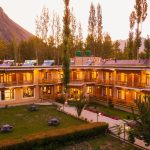
Families travel successfully to Ladakh every season. The key precaution is altitude — children and older adults need more acclimatisation time. Spending two full nights in Leh at 11,500 ft before proceeding to Nubra Valley is strongly recommended. Hillcrest Ladakh in Hunder, at a more comfortable 10,000 ft, is an ideal stay for families who have already acclimatised in Leh.
Couples and Honeymooners
Couples make up a large share of Ladakh Tourism visitors. The dramatic landscapes, monastery visits, and stargazing opportunities make it an extraordinary romantic destination. Road travel between locations is very manageable with an experienced driver.
International Tourists
International visitors should check their country’s current travel advisory before departure — not to be alarmed, but to stay informed. Advisory language often applies to broader India-Pakistan border regions and is precautionary in nature. For context, Ladakh Tourism authorities have publicly invited international travelers back and have put additional safety measures in place for 2026.
The Real Risk in Ladakh Tourism — Altitude Sickness
If there is one safety concern that every traveler should prioritise, it is Acute Mountain Sickness (AMS). This is the biggest genuine health risk in Ladakh Tourism, and it affects experienced trekkers and casual tourists alike. AMS does not discriminate by age or fitness level — it is purely a matter of how quickly your body adjusts to reduced oxygen at high altitude.
Leh sits at 11,500 ft (3,500 m). Khardung La Pass, which lies on the route from Leh to Nubra Valley, reaches approximately 17,982 ft. These are significant altitudes that demand respect.
Symptoms to Watch For
- Persistent headache, especially in the morning
- Nausea or vomiting
- Dizziness or difficulty balancing
- Shortness of breath at rest
- Fatigue that does not improve with rest
- Loss of appetite
How to Acclimatise Safely
- Spend a minimum of two full days in Leh before proceeding higher
- Drink 4 to 5 litres of water daily — dehydration worsens altitude symptoms
- Avoid alcohol and smoking for the first 48 hours
- Eat light, carbohydrate-rich meals
- Consult your doctor about Diamox (acetazolamide) before your trip
- Ascend gradually — never push to higher altitude if you are feeling unwell
For the 2026 season, the Ladakh Tourism administration has mandated that travel agencies conduct mandatory altitude briefings for all arriving guests and has upgraded medical facilities at key high-altitude locations including Khardung La.
Road Safety in Ladakh Tourism
Road conditions are another important dimension of Ladakh Tourism safety that travelers frequently underestimate. The mountain roads of Ladakh are spectacular — but they are also steep, narrow, and dramatically affected by weather.
Road Conditions at a Glance
| Route | Condition |
| Leh Town | Good sealed roads |
| Leh to Pangong Lake | Mostly good with some rough patches |
| Leh to Nubra via Khardung La | Steep, winding, requires experienced driver |
| Remote areas (Hanle, Changthang) | Gravel and dirt roads, 4WD essential |
Never drive on mountain roads in Ladakh after dark. Roads are unlit and susceptible to rockfall and flash flooding after rainfall. The golden rule of Ladakh Tourism road safety: always hire a local, experienced driver who knows these routes across different seasons.
Good news for 2026: as part of the Ladakh Tourism revival plan, roads connecting remote valleys are being widened and stabilised for all-weather accessibility, making the journey to Nubra Valley smoother than ever before.
Permits for Ladakh Tourism in 2026
Getting your permits right is an essential part of safe and legal Ladakh Tourism. Without the correct permit, you can be turned away at checkpoints — which is both frustrating and avoidable.
| Traveler Type | Permit Required | How to Get It |
| Indian Citizens | Inner Line Permit (ILP) | Online or in Leh on arrival |
| Foreign Nationals | Protected Area Permit (PAP) | Online or through tour operator |
| All travelers | Required for Nubra, Pangong, Tso Moriri | Carry physical copies always |
Always carry physical copies of your permits — checkpoints at Khardung La and other high passes verify them in person. Digital copies on your phone may not be accepted, especially in areas with no signal. Safe Ladakh Tourism starts with paperwork done right.
Essential Safety Tips for Ladakh Tourism 2026
Here is a quick-reference safety checklist for every Ladakh Tourism traveler:
- Buy comprehensive travel insurance covering altitude illness and emergency evacuation
- Download offline maps before you travel — mobile signal is unreliable outside Leh
- Use a post-paid BSNL SIM for best network coverage in remote areas
- Share your daily itinerary with someone back home
- Book accommodation in advance — quality hotels in Nubra Valley have limited availability
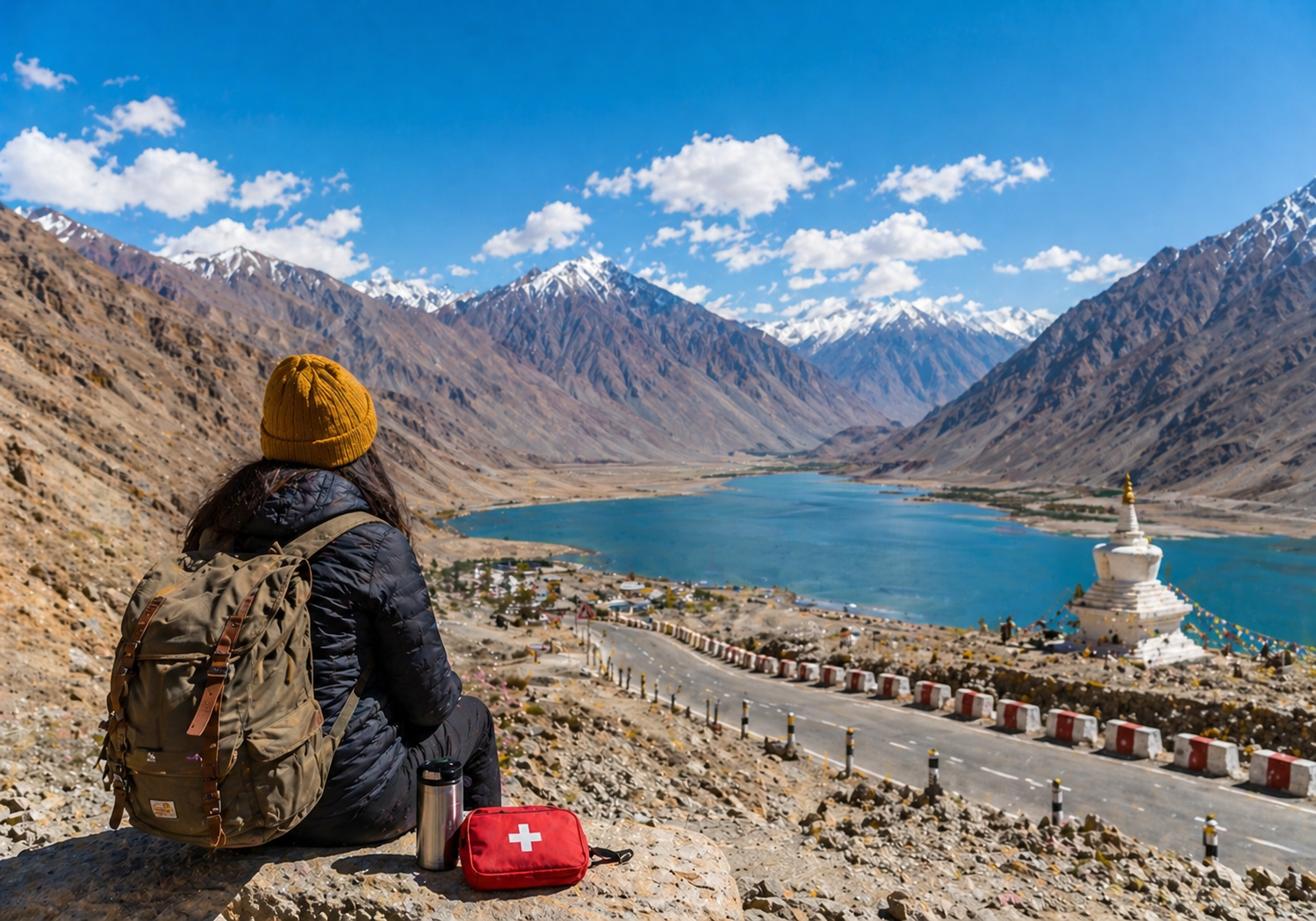
- Carry a basic first-aid kit with altitude sickness medication
- Do not photograph military installations, army checkpoints, or border zones
- Never cross into restricted areas without permits and authorisation
- Keep emergency contact numbers saved — nearest hospital and your hotel in Leh
- Charge all devices before leaving Leh — power access is limited on long drives
The 2026 Outlook — Why Now Is a Great Time for Ladakh Tourism
Despite 2025 being a challenging year, the foundations for a strong Ladakh Tourism season in 2026 are firmly in place. Security conditions have stabilised. The government and local tourism industry have worked closely together on infrastructure, safety protocols, and destination promotion.
Kushok Bakula Rimpochee Airport in Leh is being expanded to handle increased arrivals. Medical facilities at key high-altitude points have been upgraded. New tourism circuits are being developed in offbeat areas such as Hanle and Changthang. Most importantly, the people of Ladakh — hotel owners, drivers, guides, and local communities — are eager to welcome travelers back after a difficult period.
For travelers who visit responsibly, follow altitude safety protocols, and plan ahead, Ladakh Tourism in 2026 promises to be not just safe, but deeply rewarding. The landscapes have not changed. The warmth of Ladakhi hospitality has not changed. What has changed is the level of preparation and commitment to making every visit exceptional.
Conclusion
So, is Ladakh Tourism safe in 2026? Yes — absolutely, provided you prepare thoughtfully. Understand that Ladakh and Kashmir are separate regions with very different security profiles. Respect altitude by acclimatising properly. Hire experienced local drivers. Get your permits in order. And take out travel insurance.
The real risks in Ladakh Tourism — altitude sickness and challenging mountain roads — are both entirely manageable with the right preparation. Thousands of families, couples, solo travelers, and international visitors make this journey every year and describe it as one of the most transformative experiences of their lives.
Frequently Asked Questions
Q. Is Ladakh Tourism safe after the 2025 India-Pakistan tensions?
Yes. Ladakh and Kashmir are separate Union Territories. Ladakh was not directly affected by the conflict. Flight operations have resumed, the ceasefire was confirmed in May 2025, and the 2026 tourism season is proceeding normally with full government support.
Q. Is Ladakh Tourism safe for solo female travelers?
Yes. Ladakh is consistently ranked among the safest destinations in India for solo female travelers. The local culture is respectful, crime rates are very low, and the Ladakh Tourism industry actively welcomes solo women travelers.
Q. What is the biggest health risk in Ladakh Tourism?
Altitude sickness (AMS) is the primary health risk. It can affect anyone regardless of age or fitness. The best prevention is spending at least two full days acclimatising in Leh before travelling to higher areas like Khardung La or Nubra Valley.
Q. Do I need a permit for Ladakh Tourism in Nubra Valley?
Yes. Indian citizens need an Inner Line Permit (ILP) and foreign nationals require a Protected Area Permit (PAP). Both can be obtained online or in Leh. Always carry physical copies as checkpoints verify them in person.
Q. Is travel insurance necessary for Ladakh Tourism?
Absolutely. Airspace restrictions in Ladakh can prevent commercial medical evacuation. In serious emergencies, only the Indian Air Force can provide evacuation, which can cost tens of thousands of dollars without insurance. Comprehensive adventure travel insurance is essential.
Q. What is the best time for safe Ladakh Tourism?
May to September is the safest and most accessible period for Ladakh Tourism. Passes are open, weather is stable, and all major routes including Leh to Nubra Valley are accessible. September is particularly recommended for fewer crowds and clear skies.
Q. Where should I stay in Nubra Valley for a safe and comfortable Ladakh Tourism experience?
Hillcrest Ladakh in Hunder, Nubra Valley is an excellent choice. Located at a more manageable altitude of around 10,000 ft, it offers comfortable rooms, friendly staff, and is situated right near the Hunder sand dunes and camel safari — making it the perfect base for exploring Nubra Valley safely.